For farms and remote sites
Solar lighting
On a farm, at an istiraha or on a remote site, running a cable to every light along an internal road or a fence means trenching, cables, distribution boards and a running cost every night. A solar light pole works differently: each pole carries its own small panel, battery and LED lamp, charges during the day and switches on by itself after sunset.
Here we explain when solar lighting makes sense, when grid lighting is simpler, and what to ask before requesting a quote. Send one request with your type of site and a rough number of poles, and qualified companies serving your area send quotes.
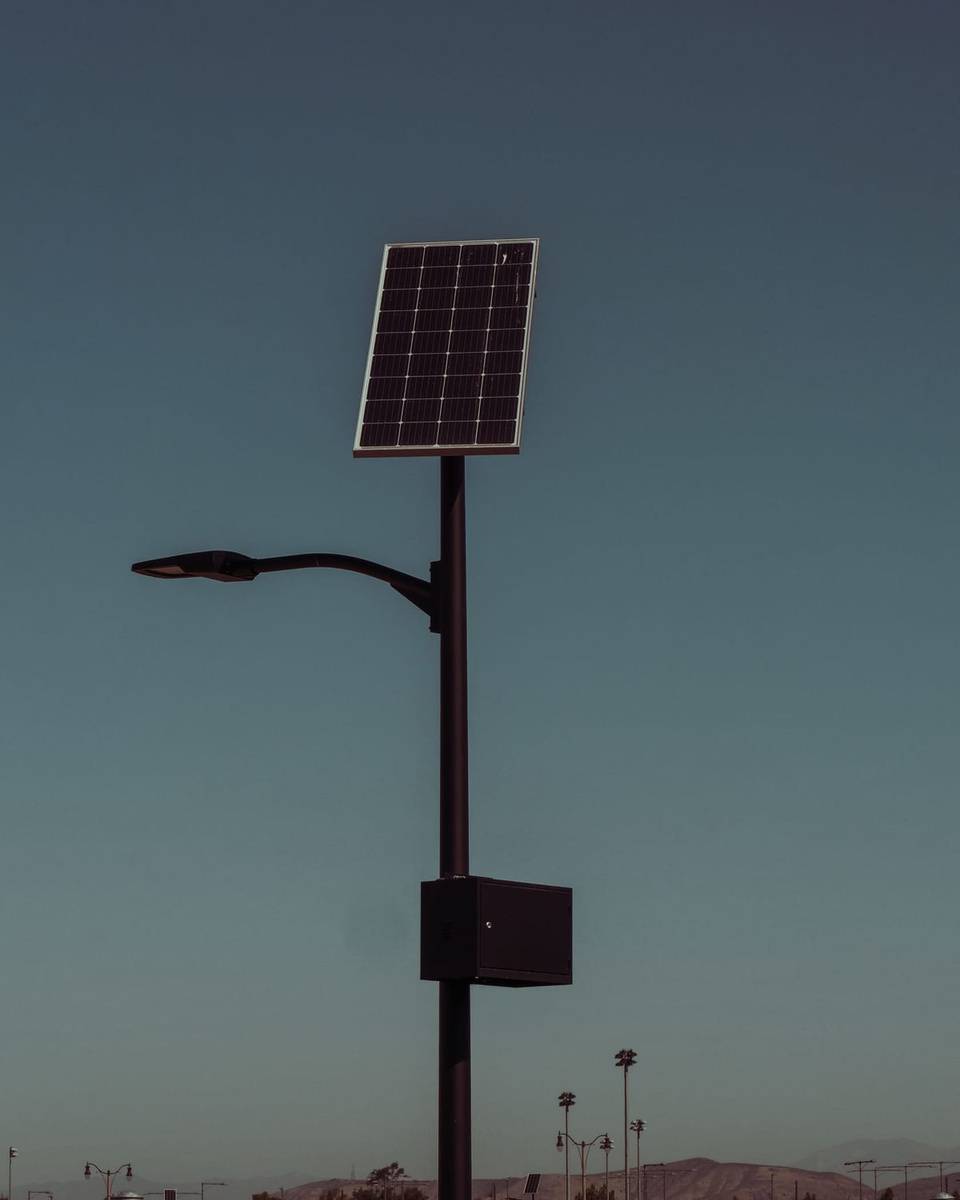
How a solar light pole works
During the day the panel turns sunlight into electricity that charges the battery through a small controller. At dusk the controller senses the falling light and switches the lamp on, then off again at dawn. No meter, no bill, no cable from a switchboard.
Most modern poles don’t run at full brightness all night: the controller dims the light in quiet hours and a motion sensor brings it back up when a person or car passes. That way the battery lasts the night and keeps a reserve for dusty days.
Two designs are common: an “all-in-one” light combining panel, battery and lamp in one unit, which is quicker to install, and a “split” design with a larger panel and a separate battery box, which suits long roads and brighter lighting.
Who it suits — and when grid lighting is simpler
Usually a good fit
Long internal roads on farms, istiraha and chalet fences, entrances to remote sites, open car parks, and sites with no grid or running on a generator. The longer the cable run would be, the more a stand-alone pole makes sense.
Needs a closer look
Spots shaded by palms or buildings, and yards that need strong light all night. You may need a bigger panel and battery, or a central off-grid system feeding several poles.
Grid lighting is simpler
If power is close by and there are only a few poles near the building, an LED lamp on the grid is usually simpler and needs less maintenance. The same goes for covered areas.
Components of a solar light in general terms
Solar panel
Mounted at the top of the pole, tilted towards the sun; its size sets the daily charge. It must stay free of shade during the day.
Battery
Usually lithium iron phosphate, for longer life and better heat tolerance. Capacity sets the hours of light and the reserve. Ask how it is ventilated and kept out of direct sun.
LED lamp
Differs in brightness and beam pattern: a road needs a long, narrow spread, a car park a wider one.
Controller
Manages charging and discharging, protects the battery and sets the lighting schedule.
Motion sensor
Raises the light on movement and dims it when quiet, extending battery life. Useful for fences and roads.
Pole and foundation
A galvanised pole that copes with heat and wind, on a concrete base suited to the soil and pole height.
What happens during the site survey
The survey starts with a question: what do you want to light, and why? A road for vehicles, a fence for security, a car park or a seating area. The technician then measures distances and spacing, notes shade, checks the soil for the foundations, and asks how long the light should stay on: all night, until a set time, or on motion only.
Ask for a quote based on a layout showing where each pole goes, not a rough count from an aerial photo.
Stand-alone or grid-fed lighting?
A stand-alone solar pole isn’t connected to the grid, so there is no connection application and no meter. Poles on public roads or land you don’t own may still need approval from the municipality or the relevant authority, so check before installing.
If you already have an off-grid or hybrid system with batteries, feeding the lighting from it may be the better choice. Any connection to an existing switchboard must be done by a licensed electrical contractor.
Dust, heat and theft
A small panel suffers from dust just like a large one, and less charge means fewer hours of light. On farms and in sandy areas, plan for regular cleaning, especially after dust storms. Heat affects the battery more than the panel, so its ventilation and shade matter. Read our guide to dust, heat and cleaning.
Theft and tampering are a real problem on remote sites. Ask about theft-resistant mounting: security bolts that ordinary tools can’t undo, and a locked battery box mounted high. On coastal sites, ask about resistance to humidity and salt.
Typical project steps
- 1. Request
Type of site, city, the areas to light and a rough number of poles.
- 2. Survey and layout
Pole positions, spacing, height, brightness and hours.
- 3. Written quote
Panel, battery, lamp, controller, pole and foundation specifications, and the warranties.
- 4. Installation
Foundations are cast, then poles installed, panels angled and lighting programmed.
- 5. Handover
A night-time test, and handover of the schedule, cleaning instructions and warranty.
Warranties to ask about
The battery is usually the first part to need replacing, so ask about its warranty specifically, not just a warranty on “the light”. Ask about the lamp, controller and panel warranties separately, and the workmanship warranty on foundations and mounting.
Get each warranty period in writing, who replaces parts at your remote site, and whether spare parts will be available later. More in our warranties and maintenance guide.
What affects the cost of solar lighting?
We don’t publish prices because costs vary with the site and specification. These are the main factors:
- Number of poles and distances
The length of the road or fence and the spacing between poles.
- Brightness and hours
All-night lighting needs a bigger panel and battery than motion-based lighting.
- Battery
Type, capacity and the number of reserve nights you want.
- Pole and foundation
Height, soil type and foundation size.
- Theft protection
Locked boxes and security fixings.
- Site access
How remote the site is and how hard it is to bring equipment in.
Compare quotes on the same number of poles, specification and warranties. Read our solar cost guide.
Financing options in general
Lighting projects are usually smaller than rooftop systems and most customers pay directly; larger projects may offer staged payments or financing. We don’t recommend lenders or quote rates — ask each company and compare the terms.
Questions to ask before signing
- How many nights without sun will the battery last?
Ask for the calculation in writing for your site, not a generic brochure figure.
- What battery is it, and what is its warranty?
Type, capacity, warranty period and the cost of replacing it later.
- How do you protect the equipment from theft?
The fixings, enclosures and mounting height.
- Does the equipment conform to Saudi standards?
Ask for conformity certificates for the batteries, lamps and panels.
Solar lighting: common questions
Does solar lighting work after a dusty or cloudy day?
Yes, if the battery is designed with enough reserve. Ask how many nights the reserve covers at your site, and clean the panel after dust storms.
Can I install the poles myself?
Poles need proper concrete foundations and secure mounting, so a specialist company should handle them. Any connection to a switchboard must be done by a licensed electrical contractor only.
Is solar lighting cheaper than grid lighting?
Not always. Over long distances and on remote sites it saves cabling and running costs; if power is close and there are only a few poles, grid lighting is usually simpler.
Do I need approval to install light poles?
On your own land there is no grid connection involved, but poles on public roads or outside your property may need municipal approval. Check before installing.
Do you sell the lights?
No. SaudiSolar only compares offers: with your consent we pass your request to qualified companies, and the contract and warranty are between you and the company you choose.
Related services
Get solar lighting quotes for your site
One request with your type of site, city and the areas to light brings quotes from qualified companies. Free, no obligation.