Why output drops with dust and heat
Dust settles on the panels and blocks part of the light before it reaches the cells. It doesn’t always settle evenly: it often collects along the bottom edge, where dew or light rain carries it down and it dries, and partial shading like this can affect a whole string, not just one panel. Bird droppings, leaves and mud after rain cause the same problem, more severely, in particular spots.
Heat works differently: panel efficiency falls as cell temperature rises, and a panel on a Riyadh roof at noon in August is much hotter than the air around it. So a clear, mild spring day can produce more than a hot summer day, even though the summer sun is stronger. This is normal and allowed for in good design, but it is a reminder that ventilation and cleaning aren’t optional extras.
Sandstorms and heavy dust
After a sandstorm the panels may be covered in a visible layer of dust that cuts output noticeably until they are cleaned. It is worth having a clause in the maintenance contract for an extra clean after strong storms, rather than waiting for the next scheduled visit.
Storms also test the installation. After high winds, a visual check of frames, bolts and ballast on concrete roofs is worthwhile, along with making sure cables haven’t shifted or started rubbing on metal edges. A well-designed system accounts for wind loads from the start, and that is a fair question to ask the installer before signing, especially for open sites and farms.
Heat, inverters and coastal conditions
Panels need air moving underneath to stay cooler. Mounting them flush to the roof without enough gap raises their temperature and lowers output, which is why panels sit on frames that leave space for airflow, and raised structures such as solar carports benefit even more from moving air.
The inverter is the most heat-sensitive component. As it heats up it reduces its own output to protect itself, and it may shut down if the heat persists. Put it somewhere shaded and well ventilated, out of direct sun and away from hot AC exhausts, with the clearance the manufacturer requires. In closed inverter rooms at large sites, cooling and ventilation are part of the design, not an afterthought.
For a warehouse in Dammam or a business in Jeddah, humidity and salt join the picture. Sea air speeds up corrosion of frames, bolts and connectors, and can affect inverters and panels. Ask about corrosion-resistant mounting materials, a suitable protection rating for outdoor equipment, and regular checks of connections. Local details are on our Dammam and Jeddah pages.
Cleaning methods and the right water
How you clean decides whether you protect the panels or slowly damage them. Most engineers agree on these general rules:
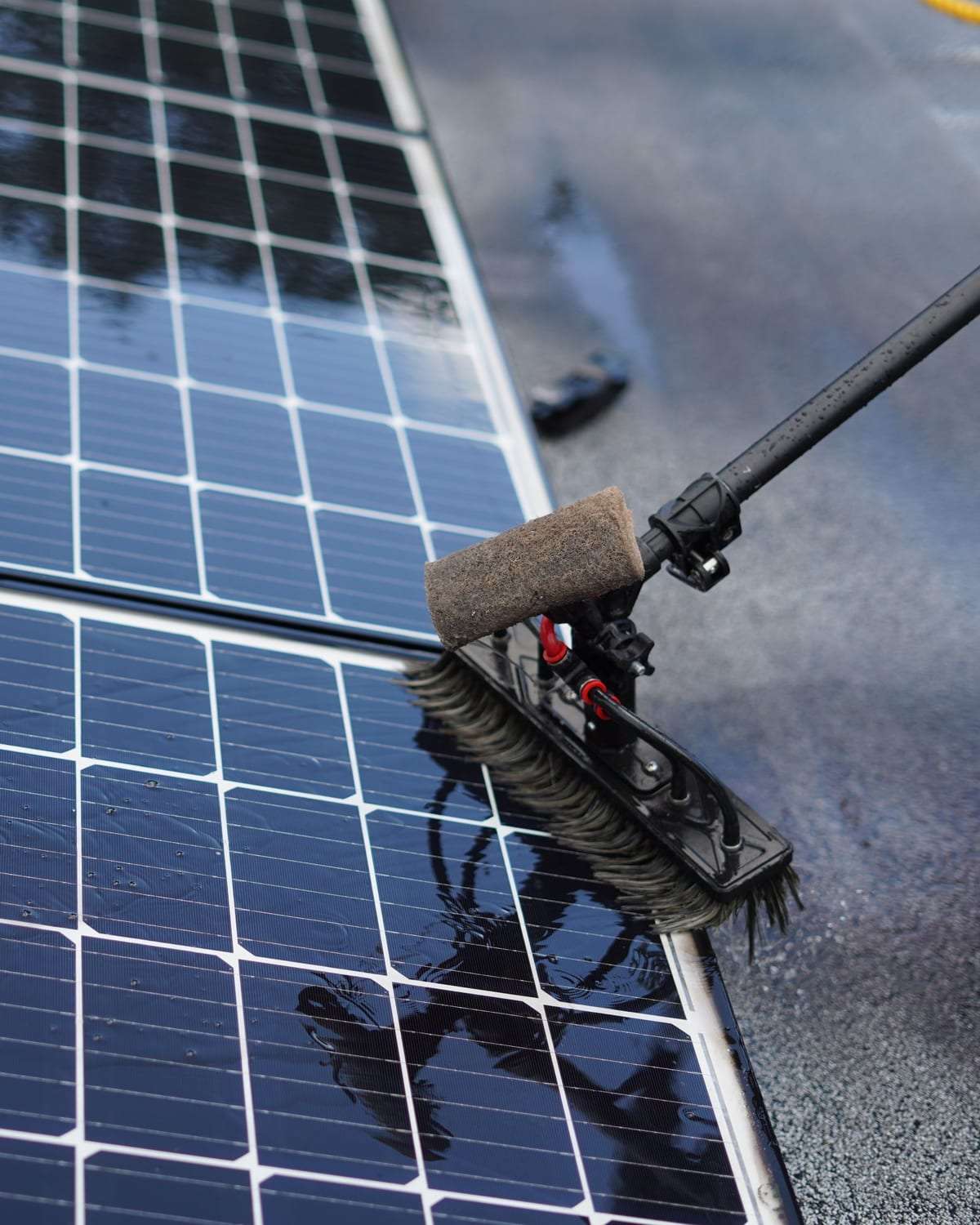
- Use a soft brush or a mop made for panels; never abrasive tools or scouring products that scratch the glass or its coating.
- Low-mineral water is better, because hard water leaves limescale spots that block light themselves. On farms, salty well water can cause exactly this.
- Avoid high-pressure jets on panel edges and connectors, and strong chemicals unless the manufacturer allows them.
- Clean early in the morning or before sunset. Cold water on a hot panel at noon can give the glass a thermal shock.
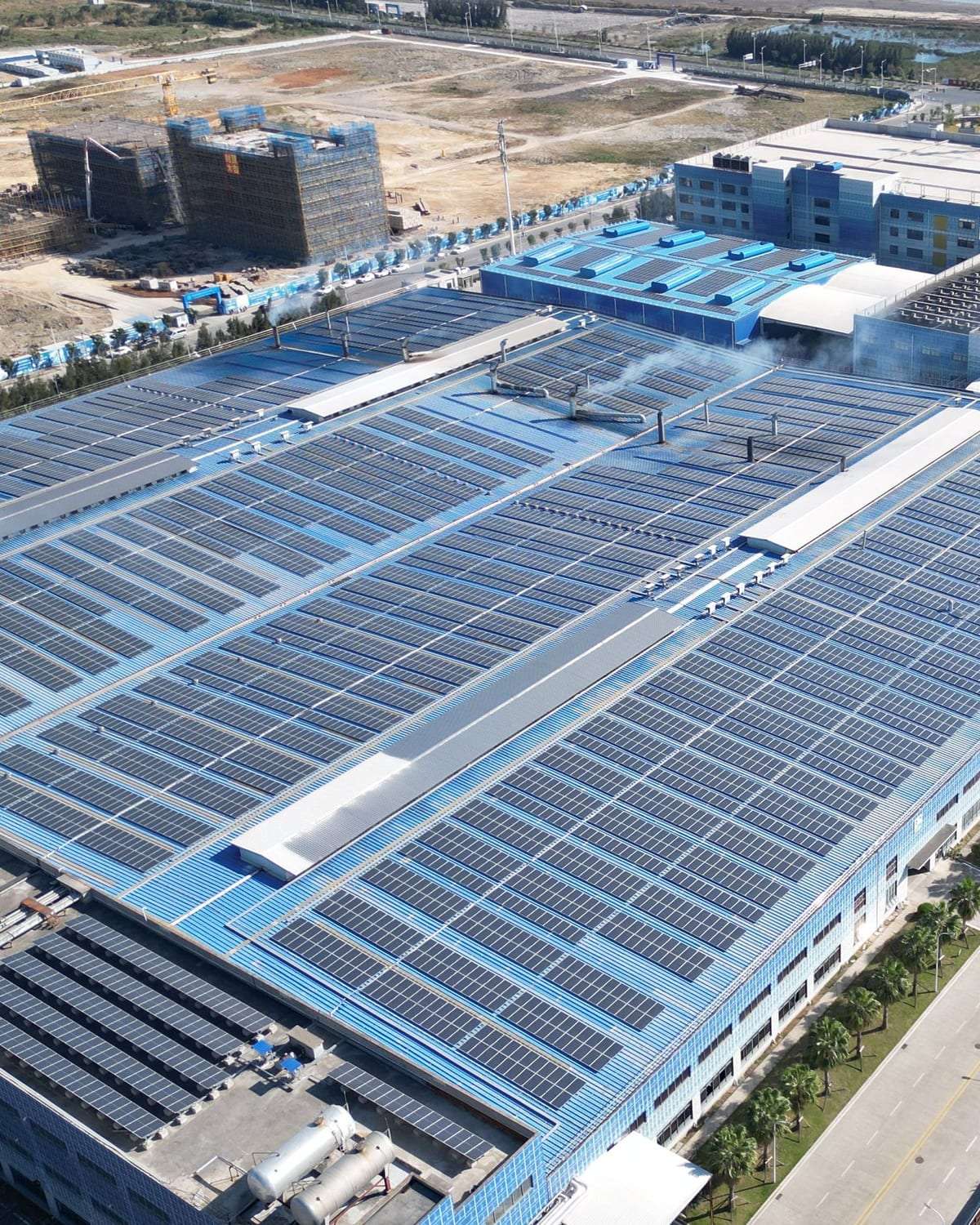
- Large sites can use automated cleaning systems or robots, with or without water, weighed against the cost of manual cleaning and the water and labour available.
Check the manufacturer’s instructions before choosing a method, since some warranties specify how panels may be cleaned. Where water is scarce, discuss dry-cleaning options with the installer.
How often should panels be cleaned?
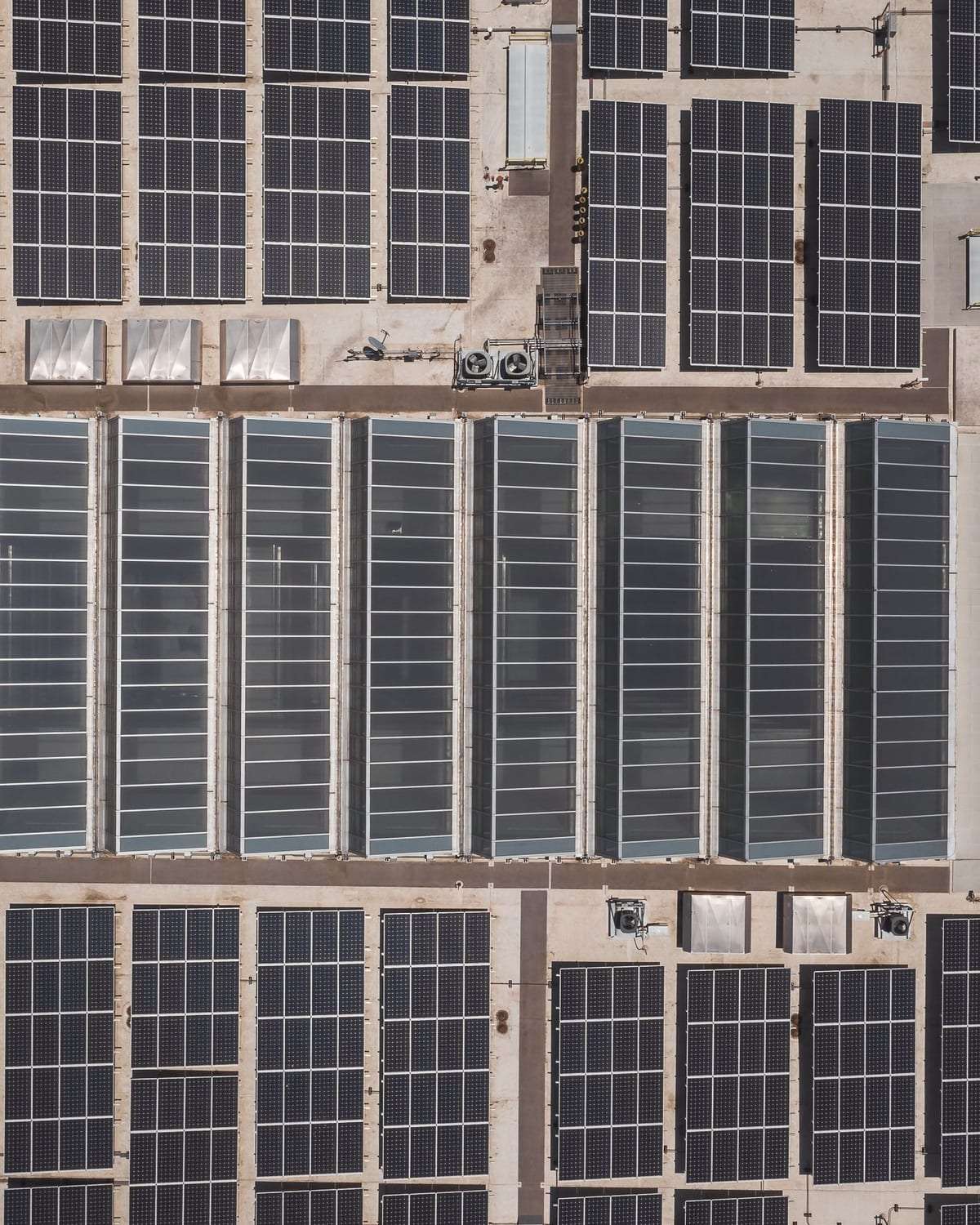
There is no single schedule for every site. A warehouse roof near a dirt road, an industrial area or a building site gets dirty much faster than a villa roof in a quiet neighbourhood. Farms, especially during ploughing and harvest, get dirty faster than cities. Tilt matters too: nearly flat panels hold dust longer than steeper ones.
The sensible approach is to start with a schedule the installer proposes for your location, then adjust it using the monitoring data. If output drops clearly between visits, clean more often. If it barely changes, you may be cleaning more than needed and spending water and labour for nothing. Striking that balance is what a solar maintenance contract should cover.
Monitoring: how to tell output has dropped
Most modern inverters come with monitoring that shows daily production on your phone or computer. Don’t just glance at the daily figure; compare similar clear days. If a clear day this week produced clearly less than a similar clear day two weeks ago, dust or a fault is the likely cause.
On larger systems, comparing strings or inverters with each other finds problems quickly: if only one string drops, the cause is usually local shading or soiling or a faulty connection, not general dust. Ask for monitoring to be active at handover, and for the contract to name who follows up alerts and acts on a drop. More in our warranties and maintenance guide.
Safety on the roof
Cleaning looks simple, but on a roof it carries real risks: falls from edges or through weak metal roofs and skylights, heat stress in summer, and slipping on wet panels. Never walk on the panels; use the designated walkways, anchor points and harnesses on high roofs.
Remember that panels produce direct current whenever there is light, even with the inverter switched off. Don’t open junction boxes or touch exposed cables, and if you find a damaged cable or broken panel, leave the repair to a licensed electrician or electrical contractor. For businesses, cleaning is best done by a trained team under a clear maintenance contract, not by general labour without equipment.
FAQ
Is rain enough to clean the panels?
Rarely. Light rain can turn dust into a muddy film that dries along the bottom edge. Heavy rain helps, but it is irregular in most of the Kingdom, so don’t rely on it.
Can I clean my villa’s panels myself?
If you can reach them from a safe spot, you can rinse them with water and a soft brush early in the morning, without climbing on them or touching any connections. Leave high or unsafe roofs to an equipped team.
Does heat damage the panels?
Panels are built to handle heat, but output drops temporarily as they get hotter. Real damage usually comes from poor ventilation around the inverter or from low-quality connections that heat up over time.
Do I need a maintenance contract?
For commercial and industrial sites usually yes, because lost output costs more than cleaning. Ask about it when comparing quotes for commercial rooftop systems, and check what it covers.
How do I find a company for cleaning and maintenance?
Describe the system type, rough size, location and roof type in one request, and receive quotes from qualified installers serving your area.
This guide is general information, not technical, financial or legal advice. Rules, tariffs and requirements can change — always confirm with the competent official bodies and a qualified solar installer before deciding. Electrical work and grid connection must be done by licensed professionals only.